IMMERSION:

HYPNOSISforSTORYTELLERS

TRAINING FOR WRITERS, DIRECTORS & ACTORS

Hypnosis for Storytellers
Dates
1-5 November 2026
Schedule
daily, 17:00-22:00
Venue
venue to be confirmed, Bucharest
Language
Romanian

The Art of Influence: From Instinct to Intention

Every dramatic scene is an act of influence. One character is trying to change another: to shift a belief, spark an emotion, or provoke an action.

As a storyteller, you already work this way instinctively. You create characters who want something, build expectation, pressure, and suspense, and lead audiences through emotional change.

Hypnotists work the same way, deliberately. They direct attention, evoke emotion, and influence behaviour by working with deeper patterns of belief, habit, and identity.

Discover how they do it. Understand how the human mind responds. Harness influence with intention and precision.

Introduction to the Hypnosis for Storytellers course

Influence is at the heart of drama.

Learn hypnosis as a creative tool: practical, hands-on, and immediately applicable to your craft.

Beyond technique, hypnosis offers a significant expansion of your creative toolkit: a way to work directly with the unconscious processes that shape perception, behaviour, and change.

This training reveals the psychology beneath the drama.

THE TRAINING

In five evenings, you’ll be hypnotising other people.

You’ll experience hypnotic phenomena yourself and gain an operational understanding of the unconscious mechanisms driving human behaviour - the same mechanisms that generate authentic characters, compelling stories, and truthful performances.

Created and taught by Liviu Tipurita - BAFTA-nominated writer-director with 25 years in film and television, and professional hypnotherapist with 12 years of clinical practice.

Places by application. We select a balanced group of 10-20 participants, bringing together different creative disciplines, levels of experience, and perspectives.

This edition is supported by Future Frames, which covers the cost of the course. You can apply free of charge. If you are offered a place, you pay only a symbolic registration fee of 100 RON.

“Before, I was looking. Now, I’m SEEING. (…) You can’t unlearn it. I use it all the time, in everything I write.”

— Catherine, 43, Novelist, New York

Read Catherine’s full testimonial →
Apply for a place

Deadline: Sunday 25 October 2026, 23:59 · Decision by 27 October 2026

WHAT YOU’LL GAIN

BECOME A HYPNOTIST

You’ll learn to guide attention, evoke inner states, and create hypnotic responses through language, presence, and sensory cues. These skills reveal how people actually respond - emotionally, physically, and imaginatively.

What shapes a hypnotic state also makes behaviour ring true on the page, on stage, and on camera.

YOUR NEW CREATIVE EDGE

Hypnosis training creates advantages across all creative roles:

Writers gain insight into how impulses, choices, and decisions emerge, allowing them to craft characters whose actions feel internally driven rather than engineered.

Directors discover how attention, expectation, and motivation shape behaviour, helping them guide actors more effectively, reveal deeper layers of subtext and character, and create scenes that feel psychologically authentic and emotionally compelling.

Actors learn methods for entering and sustaining performance states, helping them embody characters more fully and perform with greater spontaneity, authenticity, and depth.

You leave with a working understanding of how attention is captured, sustained, and directed, and how emotion and behaviour interact - knowledge you can bring to your next draft, rehearsal, or shoot.

You also gain a more deliberate command of audience engagement, helping readers and audiences become more absorbed in your world, more invested in your characters, and more compelled by your story.

WHO IS THIS FOR

CREATIVES - ANY STAGE

This training is for writers, directors, and actors at any stage of their creative careers.

You might be a best-selling author, an emerging director, an established actor, or a film student developing their first screenplay.

What matters is not where you currently stand in your career but how far and how deep you want to go, and your genuine commitment to the craft.

This is foundation training: you’ll leave competent to induce trance and work with basic phenomena, and clear about how to keep developing.

YOUR NEW SKILLSET

By the end of the five evenings, you’ll have these core skills in place:

Induce and deepen trance using multiple approaches

Work with direct, indirect, and embedded suggestion

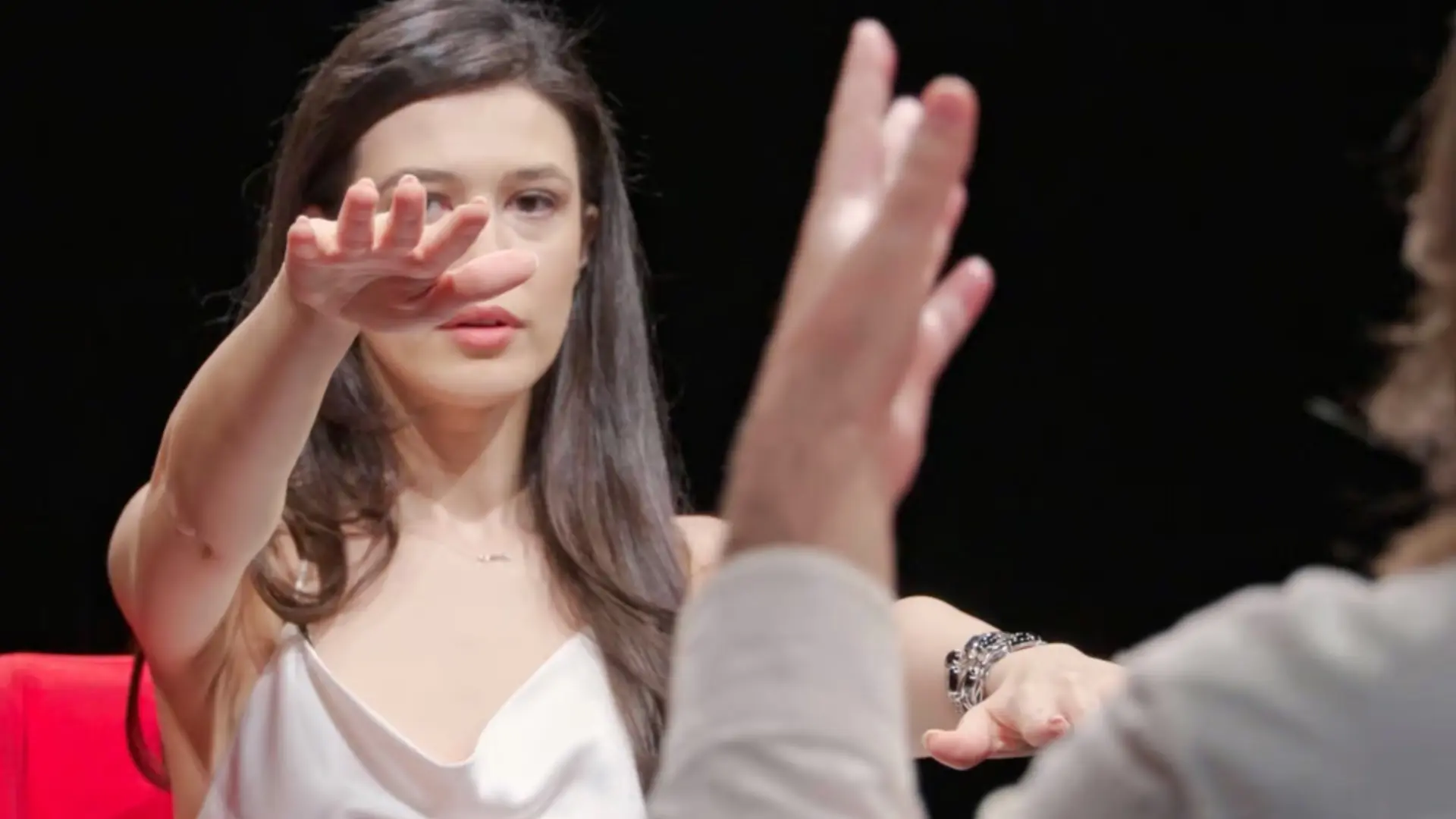
Create hypnotic phenomena, including levitation, catalepsy, and amnesia

Recognise trance indicators and calibrate depth

Utilise resistance, turning it into cooperation

Respond safely to unexpected reactions

Use self-hypnosis to access creative and resourceful states

Build rapport deliberately, and recognise when you have it

Apply hypnotic principles to character, performance, and storytelling

These foundational skills give you a framework for understanding influence, attention, and human behaviour - one you can continue developing throughout your creative career.

Hands-on operational skills you can use immediately.

Apply for a place

Deadline: Sunday 25 October 2026, 23:59 · Decision by 27 October 2026

WHERE STORIES ACTUALLY COME FROM

Every time you create, whether writing a character, directing a scene, or embodying a role, something deeper is at work. A line of dialogue appears before you’ve thought it through. A character surprises you. A scene clicks into place.

These moments aren’t accidents. They emerge from processes operating beyond conscious awareness.

Your unconscious is always active: shaping intuitions, sparking connections, and organising emotional experience. Your conscious mind steps in to refine, structure, and give form. Together they generate the choices that make stories breathe, characters live, and performances resonate.

This conscious-unconscious dynamic doesn’t just shape creative work. It influences how we think, feel, and act; who we are and what we choose. The more you understand this dynamic in yourself and others, the more authentic depth and complexity you bring to your work.

“It’s like your course shines a torch of consciousness into unconscious realms I could always feel but never quite see. The strangest thing about writing is when a character suddenly refuses to do what I’ve planned.”

— Chris, 51, Writer, London

Read Chris’s full testimonial →

WHAT’S MISSING

Most courses for creators teach story structure. Far fewer explore its source: the psychological processes that generate the decisions, behaviours, and actions from which characters, conflicts, and ultimately the story itself emerge.

This course gives you that understanding through hypnosis training. As you learn hypnosis, you gain direct experience of the processes that shape attention, influence behaviour, and drive human action.

“Before your course, I sat through countless viewings where, every time I had to give notes on the psychological complexities of a character or the story, I felt like a fraud. I could tell when something was missing, but I couldn’t really explain why or what would improve it. (…) After your course, I finally feel like I know both what could be done and how.”

— Astrid, 35, TV Series Producer & Screenwriter, Berlin

Read Astrid’s full testimonial →

“Ever since I learned hypnosis (…) I use it constantly in my directing, from the way I choreograph shots to how I communicate with my actors.”

— Peter, 48, Film Director/Writer, Los Angeles

THE PROGRAMME: EVENING BY EVENING

The training follows a deliberate progression. Each evening builds the skills and understanding necessary for the next, with continuous practice reinforcing core principles.

Evening One: Foundations

You begin by experiencing hypnosis yourself, discovering what trance feels like from the inside. Then you learn the fundamental building blocks: establishing rapport, understanding how people construct experience through the senses, and using sensory language to make experiences immediate and vivid.

By the end of Evening One, you’ve stepped into hypnosis territory.

Evening Two: First Inductions

You learn progressive relaxation and practise inducing trance states, working in pairs with extensive practice time. You discover deepening techniques - particularly fractionation - and begin working with anchoring: how specific stimuli can trigger reliable states or responses.

By the end of Evening Two, most participants have induced their first trance.

Evening Three: Suggestion and Resistance

You learn to craft direct and indirect suggestions, exploring how metaphor and story operate as hypnotic tools. You discover why change is difficult through the concept of homeostasis, and learn utilisation techniques that turn resistance into cooperation.

By the end of Evening Three, you understand how beliefs, habits, and identity resist change, and how to work with them.

Evening Four: Phenomena and Application

You work with hypnotic phenomena: arm levitation, catalepsy, magnetic fingers, and amnesia. You learn how suggestibility tests transform into inductions. You’re introduced to open loops and embedded commands, exploring how the same principles shape dialogue, subtext, and staging.

By the end of Evening Four, your technique has become noticeably more sophisticated.

Evening Five: Integration

You learn a key rapid induction based on a classic handshake interrupt, demonstrating how pattern interruption can shift attention and facilitate trance. You bring everything together, creating and performing your own hypnotic scripts and applying what you’ve learned to your own work.

By the end of Evening Five, you can induce trance and create hypnotic phenomena.

Theory and Practice

Each evening includes theory, demonstration, and extensive practice. You’ll work in pairs and small groups, taking turns as hypnotist and subject. The ratio is roughly 35% theory, 65% practice - because hypnosis is best understood by doing it.

“As a budding director, I’ve sat through plenty of courses that drown you in theory before you ever get to try anything. What was so refreshing here was the focus on learning by doing. You flipped ‘Ready, aim, fire’ into ‘Ready, FIRE, aim’ - act first, learn fast, and adjust with intention once I could actually see what was happening. The way you taught me hypnosis gave me the confidence to experiment, refine, and improve - exactly what I was looking for.”

— Marcus, 28, Theatre Director, Chicago

“I joined the course not only because hypnosis has always intrigued me, but also because I work daily with directors, actors, and sometimes writers (…). What I didn’t realise was just how useful it would be - not only in my interactions with people, but in the way I frame and light a shot, and in the way I move the camera. There’s so much imagery in hypnosis, and so much hypnosis in imagery.”

— Leo, 35, Cinematographer, Copenhagen

Apply for a place

Deadline: Sunday 25 October 2026, 23:59 · Decision by 27 October 2026

WHO’S TEACHING

DECADES IN BOTH WORLDS

Liviu Tipurita is a BAFTA-nominated British writer-director. He has directed numerous award-winning documentaries for the BBC, ITV, Channel 4, CNN, NBC, and ARTE, and has written and directed independent feature films.

Alongside his work as a writer-director, he trained in the Meisner Technique and developed a long-standing collaboration with The Actors Temple, one of the UK’s leading Meisner schools, deepening his understanding of performance, impulse, and authentic behaviour.

Then he discovered hypnosis. What began as research for a documentary series became a second profession, and a way of exploring how behaviour, emotion, and identity interact.

He trained with Jeffrey Zeig, Richard Bandler, and Paul McKenna - three of the most influential figures in modern hypnosis - studying advanced Ericksonian techniques through the Milton H. Erickson Foundation alongside approaches informed by neuroscience. He established a clinical practice in Central London and has also practised internationally, working with complex cases including trauma, phobias, PTSD, OCD, depression, anxiety, relationship issues, and family therapy.

Over twelve years of practice, he developed a deep understanding of how behaviour changes, how emotional patterns are maintained, and what enables lasting transformation.

Liviu holds the Hypnotherapy in Practice Diploma (HPD), the UK’s benchmark qualification for professional hypnotherapists. He is a full member of the National Council for Hypnotherapy and is registered with the General Hypnotherapy Register.

Hypnosis for Storytellers is part of Psychology Tools for Storytellers, Liviu’s series of courses applying psychology to the storyteller’s craft.

WHY THIS TRAINING EXISTS

THE ARCHITECTURE OF AN IMMERSIVE EXPERIENCE

A Personal Note from Liviu Tipurita · Course Creator & Lead Trainer

An Epiphany

As I began practising hypnotherapy, I was working with a client when I had an epiphany that rippled across both of my professions.

First, I realised that I was essentially doing the same job I had always done: directing. Except now I was not directing contributors, actors, or crews. I was directing my client’s unconscious.

Second, I understood that hypnosis and drama share the same DNA. Both are forms of influence. And, if they are any good, neither simply tells. They immerse.

A good film, play, or book does not deliver information. It immerses the audience in an experience that prompts insight.

Hypnosis works in much the same way: deliberately structuring experience so that it lands with maximum impact.

This was the bridge between my two worlds, which until then had seemed separate.

Home Ground

What immediately struck me was how familiar much of this territory felt.

I had already spent decades working with many of the same tools in filmmaking and storytelling: attention, pacing, imagery, metaphor, expectation, tension, and resolution.

Like effective drama, effective hypnosis engineers an experience. Emotional arcs are constructed, not accidental. Influence operates at multiple levels. There is anticipation, conflict, and pay-off.

The Shift

Yet there was something genuinely new in hypnosis.

For the first time, I was working with a model of the mind that consistently produced visible, immediate results.

As I worked with this model, my clients’ emotional and mental states changed in front of me. The changes were often exactly the ones I intended, and I had a framework for understanding why.

The feeling is difficult to describe.

Before, I was often relying on instinct. Now I had a model to follow.

Before, I was guessing. Now I could be deliberate.

Before, I was intuitive. Now I could also be precise.

What I’d Been Searching For

Since my early teens, I’ve been obsessed with literature, drama, philosophy, psychology, religion, and human behaviour. I read constantly and was always searching for something, though I couldn’t quite say what.

Only when I discovered hypnosis and began practising it did I find an answer to a question that had quietly connected all those interests:

How do you create change, deliberately and quickly?

How do people change?

How do beliefs change?

How do behaviours change?

How do we change ourselves?

Hypnosis did not answer every question. But it gave me the most practical and immediately useful framework I had ever encountered for exploring them.

I only wish I had discovered it earlier.

Get on Your Bike

I could describe this model of the mind to you here. But that would only be theory. I am fully aware that, no matter how intrigued you may be by the description of this course, until you experience and practise hypnosis yourself, it remains abstract or, at best, a mystery.

Understanding hypnosis intellectually is a little like understanding cycling from a book. You may grasp the principles, but sooner or later you have to get on the bike.

This training is designed to give you that experience.

Drama and hypnosis are distinct disciplines. Yet they share a remarkable concern with attention, anticipation, emotion, belief, behaviour, and transformation, and could inform each other in profound ways.

They have rarely been brought together because very few people have built a professional career in both.

That’s why this training exists.
PRACTICAL DETAILS

AT A GLANCE

Dates: Sunday 1 November - Thursday 5 November 2026

Times: daily, 17:00-22:00

Venue: venue to be confirmed, Bucharest

Format: Five-evening intensive course

Group size: 10-20 participants, selected by application

Commitment: All five evenings

Language: Romanian. The course also runs in English at later dates.

Fee: This edition is supported by Future Frames, which covers the cost of the course. You can apply free of charge. If you are offered a place, you pay only a symbolic registration fee of 100 RON.

Applications close: Sunday 25 October 2026, 23:59

Decisions: by 27 October 2026

Certificate: Digital certificate of attendance, plus access to the alumni community

WHAT YOU’LL NEED

You’ll need to commit to the full training. The programme builds progressively, so you can’t drop in for selected sessions or leave early.

You’ll also need a willingness to be hypnotised yourself and to work directly with other participants: you’ll spend most of your time practising, not observing.

No previous experience with hypnosis is required. Bring curiosity and commitment.

The application form includes a few short questions about your health, for your safety and that of the other participants. For certain medical conditions and circumstances, a group hypnosis course is contraindicated. If one of them applies to you, we will unfortunately be unable to offer you a place - a decision about the setting, not about you. Before you apply, please read the full list under “Are there any health contraindications?” in our FAQ. On the form, start with the health section.

Apply for a place

Deadline: Sunday 25 October 2026, 23:59 · Decision by 27 October 2026

TESTIMONIALS

From earlier editions of the course, held over the years in English.

Catherine, 43, Novelist, New York

“I’ve always loved observing people, wondering what their real story might be. Your hypnosis course was - for me - a total RESET. The kind that splits everything into ‘before’ and ‘after’.

Before, I was looking. Now, I’m SEEING. The whole conscious-unconscious dynamic is extraordinary. You can’t unlearn it. I use it all the time, in everything I write.”

André, 35, Film Director/Editor, Paris

“Footsteps in a corridor. You hear them approaching, but the camera stays fixed on a closed door. The unseen figure becomes more menacing than if shown. I remember you clearly giving us this example during our hypnosis course.

Have you read Bresson’s Notes on the Cinematographer? His philosophy of cinema through subtraction - stripping away redundancy so that sound and image collide rather than mirror - heightens sensorial experience. By refusing to show what is heard, or to hear what is seen, you force the audience into active participation.

This interplay transforms film into a medium of suggestion, where the viewer’s imagination completes the experience. It’s exactly what you were talking about in our course! Bresson is completely up your alley - cinema should not explain, but evoke.

Now I know precisely why I always felt so entranced watching his films. He’s an Ericksonian hypnotist!”

Chris, 51, Writer, London

“It’s like your course shines a torch of consciousness into unconscious realms I could always feel but never quite see. The strangest thing about writing is when a character suddenly refuses to do what I’ve planned. I’ll sit down with a neat outline, and halfway through a scene someone just walks off, or says something that derails the plot. It feels less like invention and more like discovery - as if I’m overhearing lives that already exist.

Elmore Leonard said his characters had to audition, and if they didn’t speak, they were killed. Ray Bradbury joked that plot is only footprints in the snow after your characters have run past on their way to incredible destinations. I get that now. The story isn’t mine alone - it’s ‘theirs’ too. And ‘they’ live deep in my unconscious, with a life of their own.”

Astrid, 35, TV Series Producer & Screenwriter, Berlin

“Before your course, I sat through countless viewings where, every time I had to give notes on the psychological complexities of a character or the story, I felt like a fraud. I could tell when something was missing, but I couldn’t really explain why or what would improve it. So frustrating!

After your course, I finally feel like I know both what could be done and how. I still haven’t read Lacan, but I feel like I understand what truly matters - the fundamentals. It’s invaluable to me, both as a producer and as a writer.”

Ana, 27, Actor, Madrid

“‘Layered identity’ took on a completely new meaning after I learned hypnosis with you. My work as an actor - knowing how to consciously tap into unconscious drives and how to use dissociation - is now on a different level. My acting feels alive, unpredictable, and - the director that I currently work with gave me the biggest compliment - ‘deeply human’.

You opened my eyes and my heart! Thank you, Liviu.”

Sofia, 25, Theatre Director, Athens

“It was great! On the second day I was inducing trance myself. By the end of the week, I could confidently run a complete hypnotic session. (…) And now I know it for sure: it’s not my job to tell the audience what to feel - but to create conditions where they discover it themselves.”

Charles, 64, Film Director/Screenwriter, London

“Over the years, I listened to you talk about hypnosis for countless hours. It was fascinating, but to be totally honest, I couldn’t make sense of what you were really saying. That was frustrating - because I knew it mattered, yet I couldn’t contribute anything. It was simply outside my realm of understanding.

Ever since you taught me hypnosis, though, my life has changed. It’s like suddenly seeing the Matrix. Damn, I wish I’d learned this in my twenties - my life and my films would have been infinitely better.”

Bernadette, 22, Film Directing Student, Beaconsfield

“What I learned about hypnotic and post-hypnotic suggestion significantly changed the way I think, both as a film director and screenwriter and in my everyday life. I now have a much deeper understanding of how attention, imagination, and suggestion influence behaviour. It's amazing how many possibilities open up when you truly understand hypnosis.”

FAQ

FREQUENTLY ASKED QUESTIONS

Do I need any prior experience with hypnosis?

None whatsoever. This course is designed for complete beginners. We start from the very beginning and build your skills step by step.

Why should a writer, director, or actor learn hypnosis?

Because hypnosis works with attention, behaviour, suggestion, and the conscious-unconscious dynamic - the same forces that make a character believable and hold an audience.

You’ll learn hypnosis as a skill, and gain a deeper understanding of the processes that shape creative work.

Is hypnosis safe?

Yes. You remain in control throughout and can stop any exercise at any time. You’ll learn proper techniques, safety protocols, and how to respond to unexpected reactions.

Hypnosis is a natural state that people enter and leave every day. You’re simply learning to guide the process intentionally and skilfully. A few health conditions call for caution; you’ll find them below.

What if I’m not naturally good at hypnosis?

Hypnosis is a learnable skill. Some people find certain aspects easier than others. The more you practise, the faster the skill grows - and the group is small enough for individual attention.

What if I can’t hypnotise anyone?

The second evening is where most participants induce their first trance, with regular feedback as you practise and support as the skill takes hold. Each skill builds on the last, with continuous practice throughout.

Can I really learn this in five evenings?

Yes. Five intensive evenings of practice build solid foundations. You won’t learn everything about hypnosis, but you will learn to induce trance, create hypnotic phenomena, and understand basic principles that make hypnosis work.

What if I can’t be hypnotised?

Most people can experience hypnosis when they’re willing to engage with the process. The question isn’t whether you’ll have an experience, but which approaches work best for you.

Part of the training is learning to recognise different response styles, including your own.

Will I be asked to do anything embarrassing?

No. Every exercise serves learning, and every step is your choice.

Are there any health contraindications?

Hypnosis is safe for most people. Some health conditions, however, call for caution. For people living with them, one-to-one hypnotherapy with a clinician who knows their history may remain an option; a group course is the wrong setting.

If any of the following applies to you, we will unfortunately be unable to offer you a place in this course - a decision that concerns the setting alone:

Schizophrenia or schizoaffective disorder (at any time), or any other episode of psychosis

Bipolar disorder (at any time)

Epilepsy or another seizure disorder (at any time)

A dissociative disorder

A mental health crisis, a stay in a psychiatric hospital, or thoughts of suicide or self-harm

Current medication that affects alertness or perception

A condition applies if you have been diagnosed with it, are being assessed for it, or have experienced it. Unless an item says otherwise, it refers to the past 12 months.

If you are unsure whether an item applies, please consult your doctor or write to us at liviu@futureframes.ro before applying.

What happens if I miss a session?

The training builds progressively, and much of the work happens in pairs, so an absence costs your partner their practice too.

If you cannot commit to all five evenings, please wait for a future course.

Are there any ground rules?

Three, for everyone’s safety and learning: attend every session free of alcohol and recreational drugs; respect your fellow participants and their privacy; and follow the trainer’s instructions during exercises. We may ask anyone who does not observe them to leave a session, or the course, even after they have been offered a place.

Is this hypnotherapy training?

No. This is foundation training in hypnosis: the practice of inducing and working with trance states. You’ll learn to hypnotise, create hypnotic phenomena, and understand how hypnosis works.

Hypnotherapy is the clinical application of hypnosis to psychological and medical issues. It requires extensive additional training, supervision, and professional accreditation.

This course is not a hypnotherapy qualification, though it may serve as a valuable first step for those interested in further study.

What’s the difference between this course and other hypnosis training?

Most hypnosis courses focus on techniques: how to induce trance, deliver suggestions, and create hypnotic phenomena.

This course teaches those skills, and also explores their relevance to writing, directing, acting, and storytelling. You’ll learn hypnosis from someone who has built a professional career in both creative practice and clinical hypnosis.

The result joins hypnosis and creative practice in a single training.

What’s the difference between this and online courses?

Online courses can teach concepts. Hypnosis is ultimately learned through practice.

This training gives you extensive supervised work with real people, immediate feedback, and the opportunity to experience hypnosis from both sides: hypnotist and subject.

Romanian is not my first language. Does that matter?

A good conversational level of Romanian is necessary. You’ll be practising hypnotic inductions, discussing subtle concepts, and working closely with other participants.

If you can comfortably hold detailed conversations in Romanian, you’ll be fine.

Does the course run in other languages?

Yes. It was developed, and is regularly taught, in English. To hear about future English runs, write to liviu@futureframes.ro.

Do I need to take notes?

A notebook can be useful, but most learning happens through practice. Many participants find direct experience more valuable than extensive note-taking.

Will I receive a certificate?

You’ll receive a digital certificate of attendance.

This is a skills training rather than a certification programme. Personal recommendations may be provided to participants who demonstrate exceptional commitment and competence.

What if I need support after the course?

All graduates become members of the alumni community, where participants exchange ideas, practise together, and continue developing their skills.

Membership is free and exclusive to those who have completed the training.

Questions not answered here? Write to liviu@futureframes.ro.

Apply for a place

Deadline: Sunday 25 October 2026, 23:59 · Decision by 27 October 2026